
A brief history of broadband
Modern broadband has transformed our day-to-day lives so dramatically that it’s easy to forget how limited its capabilities were just 20 years ago. From opening up cinematic worlds in crystal-clear 4K to being able to download monstrous-sized files in mere minutes, it’s hard to comprehend just how quickly how we got to where we are today.
Internet connections weren’t always as fast, stable or always on. In fact, the story of broadband is one of constant evolution – from screeching modems and tangled phone lines to today’s gigabit-capable, ultrafast networks.
To see how broadband has evolved (and continues to), let’s take a journey through its history and how it truly changed how we live, work and entertain ourselves…
Pre-2000: The dial-up era
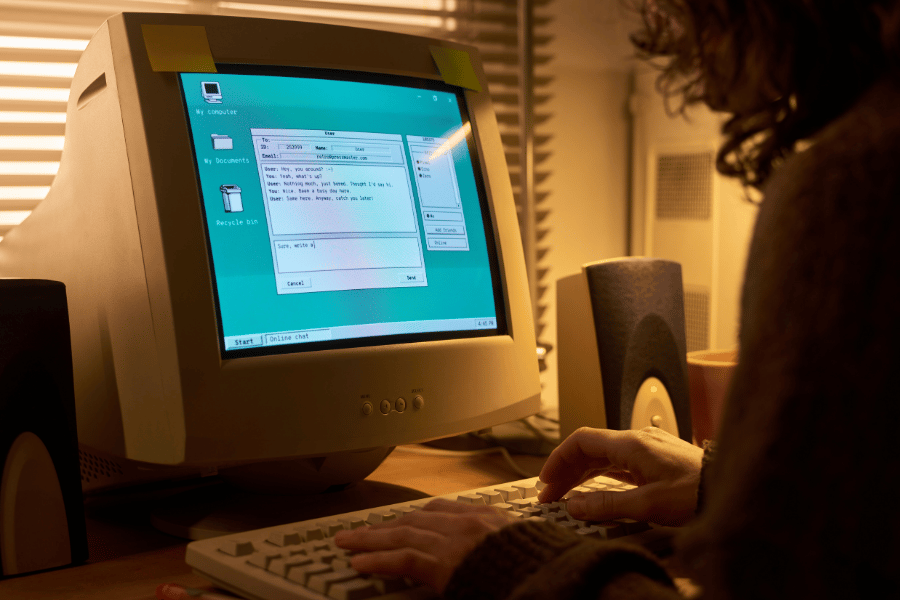
Before broadband, the standard internet connection for homes was through a copper phone line using ‘dial-up’ technology.
Dial-up got its name, because you had to manually “dial up” the internet each time you wanted to go online. It often took a while just to connect, let alone for anything to load. You might remember the distinctive, high-pitched screech as you connected - this was coined an audible "handshake" literally, a handshake protocol, where your computer’s modem would ‘talk’ to your Internet Service Provider's (ISP) modem, negotiating a common language and testing the telephone line quality.
It would often cut into your phone calls, as you couldn’t call and use the internet at the same time. And equally, if someone answered the landline, your internet connection would drop too!
Speeds were also incredibly limited. Standard dial-up topped out at 56kbps, making even simple tasks sluggish. Downloading just a single song could take minutes or even hours.
Yet for many homes, this was their first time using the web – opening their doors to the brave new world of email, online shopping, chat rooms, early instant messenger and much, much more.
2000 onwards: The birth of broadband
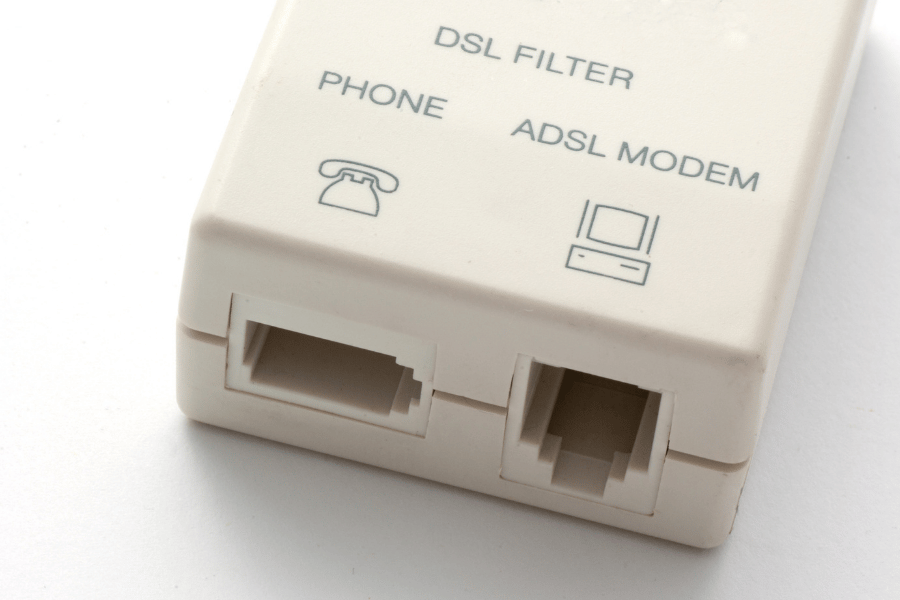
Broadband changed everything when it launched commercially in the UK in 2000. Unlike dial-up, it could separate telephone and internet signals, and marked the beginning of faster, more reliable internet that transformed how people used the internet at home.
This was the big shift that made the internet start to feel effortless and more accessible for everyone. It was now an ‘always on’ service, you didn’t have to switch on and off every time you wanted to go online.
How broadband started to change
The first widely available broadband connection was ADSL (Asymmetric Digital Subscriber Line). This still used the telephone line but offered UK homes speeds of 512kbps – almost 10x faster than dial-up!
Cable connection followed shortly after the same year, using coaxial cables like the ones for televisions to offer a slightly faster speed on a dedicated line.
With a choice of two much faster connections, people were suddenly able to browse, share files like songs, videos and pictures at speed and scale. As home broadband rolled out across the country, the popularity of multimedia websites like video hosting and music websites soared. Online multiplayer games boomed. And soon, social media became a thing too. It was in this golden era that some of today’s biggest online platforms and websites launched:
Wikipedia (2001)
Myspace (2003)
Facebook (2004)
Reddit (2004)
YouTube (2005)
Twitter (2006)
The new millennium also saw the arrival of 3G mobile networks (2001). Then in 2007, the launch of the Apple iPhone ushered in the dawn of the smartphone era. With new possibilities in our pockets and homes, more of us started to use the internet to work, learn, socialise and play every single day. By the end of the decade, most UK households had a broadband connection of some sort.
2010: The beginning of fibre broadband
Broadband continued to rapidly excel throughout the early noughties and into the next decade. The next biggest leap in home internet came with the arrival of fibre connections in 2010.
Part fibre
By 2010, Part Fibre or Fibre to the Cabinet (FTTC) had replaced ADSL as the new standard – after first launching in 2008. This hybrid connection linked fibre optic cables to street cabinets but then used copper for the last section into homes.
In comparison to ADSL and Cable, FTTC improved performance dramatically. But because the last bit of the journey was still copper, the signal was still affected by congestion and distance from the exchange. And speeds could still vary depending on where you lived – making it particularly challenging for remote or rural properties.
Full fibre
That all changed in 2011, when the first ever full fibre optic connection, also known as ‘Fibre to the Premises’ (FTTP) first launched in London in the UK. It offered customers unprecedented speeds as fast a 1 Gigabit (Gbps). This would have been unimaginable just a decade earlier!
Most importantly, full fibre no longer relied on copper for any stretch of the journey. It changed the game by bringing quality fibre optic connection all the way into the home. Ultra-high-definition streaming, seamless high-quality video calls, rapid real-time gaming and near-instant downloads were now an everyday possibility.
What’s next for broadband?
Today, full fibre is rapidly expanding across the UK – by 2028, it will have reached 92% of UK homes. And we’re also seeing copper telephone networks being switched off across the country once and for all in 2027.
As a nation, our tech needs have come a long way. In 2015, the average UK household had 3 connected devices. But now, most of us have more than 13 connected devices.
What’s clear though, is that full fibre is here to stay.
It’s built to handle our evolving appetite for more data-heavy tasks like:
Virtual reality and immersive online experiences
Internet of Things (IoT) and networks of smart devices across the home
8K high-definition streaming
Real-time, highly reactive gaming with minimal lag or latency
That’s why investing in a quality full fibre connection for your home will hold you in good stead for many years to come.
Broadband that futureproofs your home
History shows that our homes need a future-ready connection that can keep up with the pace of progress. That’s why we only provide, ultrafast and reliable, full fibre broadband to our customers.
LightSpeed isn’t just ready for the future. It is the future. We offer soaring full fibre speeds of up to 5Gbps, as well as other connected services like Digital Voice calling and smart home security.
If you’d like to find out how we can futureproof your home, take a look at our packages here: Full Fibre Broadband Packages | Get Ultrafast Broadband
No more buffering. No more lag. Just pure, uninterrupted speed.
Switch to LightSpeed full fibre broadband today