
eero 6 vs eero 7: which is better?
eero routers are award-winning, market-leading and reliable – but what’s best for your home broadband setup, their latest eero 7 models or the trusted eero 6 series?
Since launching the first mesh Wi-Fi system in 2016 – it's no surprise that eero routers have become such a well-established name in household tech. They’re solid, reliable, easy to set up and offer some of the best mesh Wi-Fi technology for the home out there at an affordable price.
In less than ten years since they started, Amazon have sold tens of millions of their products, and their range is growing all the time.
But with their new eero 7 and Pro 7 routers coming on the market last year, how can you choose the right eero router for your specific needs?
eero 6 vs eero 7? It’s a matter of standards
First thing’s first… the key difference to understand between the eero 7 and eero 6 range is the Wi-Fi standard they operate on:
eero 7 models use Wi-Fi 7
eero 6 models use Wi-Fi 6 or 6E
What’s a Wi-Fi standard?
In simple terms, each Wi-Fi standard defines the frequency and speed of data transmission that wireless devices use to communicate with each other.
Since they first launched in 1997, new Wi-Fi standards have been coming out roughly every few years. Right now, Wi-Fi 7 is the latest, with the best available features and fastest speeds – although Wi-Fi 8 is already in the pipeline!
Comparing the latest Wi-Fi standards
Here’s a quick glance at how the last three standards compare:
Feature | Wi-Fi Standard | Frequency | Speed | Channel Width | Device Compatible | Security |
|---|---|---|---|---|---|---|
eero 6, eero 6+ and eero Pro 6 | Wi-Fi 6 | 2.4GHz, 5GHz | 9.6 Gbps | Up to 160MHz | Backwards compatible | WPA3 |
eero Pro 6E | Wi-Fi 6E | 2.4GHz, 5GHz, 6GHz | 9.6 Gbps (theoretically) | Up to 160MHz | Backwards compatible but not a 6GHz | WPA3 |
eero 7, eero Max 7 and eero Pro 7 | Wi-Fi 7 | 2.4GHz, 5GHz, 6GHz | Up to 46 Gbps (theoretically) | Up to 320MHz | Backwards compatible to 6E, 6, 5 and earlier | WPA3 (With enhanced protections) |
Wi-Fi 6 vs Wi-Fi 7: How has the tech evolved?
The average consumer doesn’t really need to get too bogged down in the specs. All they really need to know is how each Wi-Fi standard can improve connectivity across their home.
So, what really makes one eero router spec better than the other?
Let’s take a look...
1. eero 6
The first eero 6 router came out in late 2020, following the launch of Wi-Fi 6 the year before, making it one of the most influential pieces of Wi-Fi technology since the early noughties.
Compared to earlier models, it used Wi-Fi 6 technology, with a number of genuinely useful upgrades like:
The ability to handle up to 75 connected devices without slowing down
Improved performance in busy areas like flats and shared buildings
Greater efficiency, meaning connected devices used less battery
Reduced latency for gaming, video calls and streaming
All this made eero 6 routers the best fit, at the time, for smart homes, early IoT and 4K streaming – and they’re still a solid choice today. But their place at the top wasn’t for long.
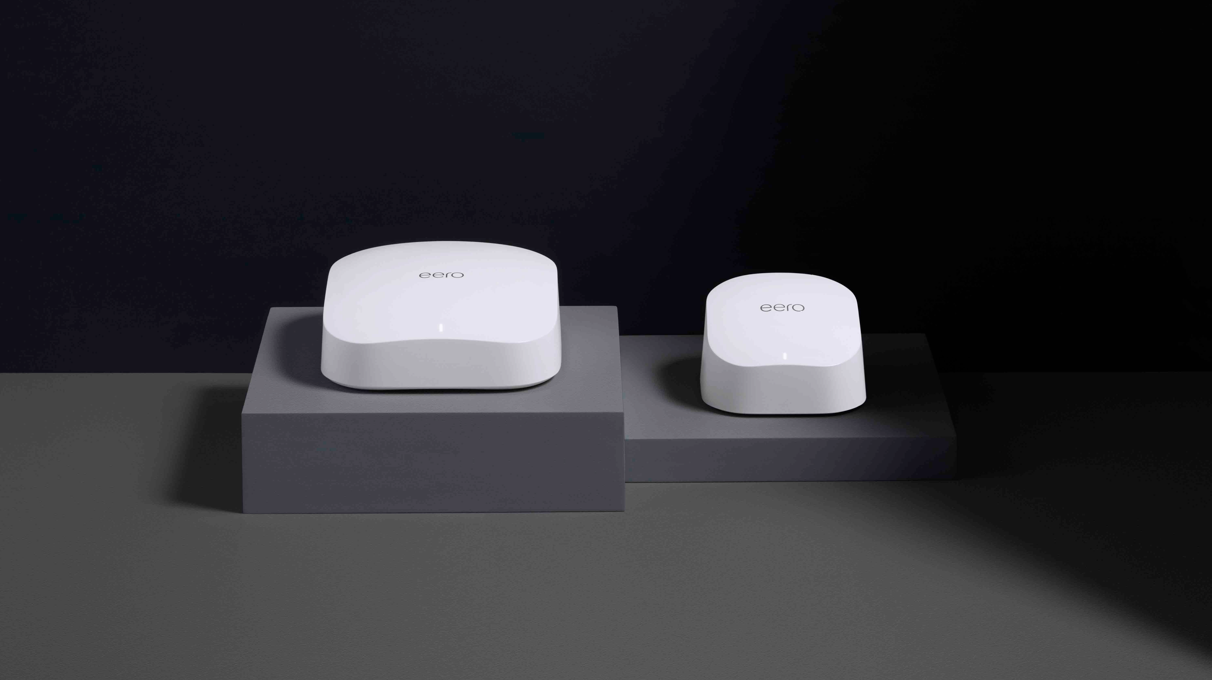
2. eero Pro 6E
Hot off the heels of Wi-Fi 6, came 6E in late 2020 – the ‘E’ standing for extension. It’s unusual for a new standard to come so soon, but this was an unusual year. Demands for more robust connectivity skyrocketed as remote working and device-heavy households became the norm. Within months, the Wi-Fi market grew faster than ever before, and there was an 80% surge in upload traffic. 6E used the higher 6GHz spectrum, which brought:
Greater available bandwidth
Less interference from older Wi-Fi technologies
Higher speed data transfer for better performance in busy homes
Improved handling of device-heavy environments
And eero, being at the forefront of Wi-Fi, was quick to respond with their Pro 6E model – giving their customers the benefits of this higher boost in frequency.
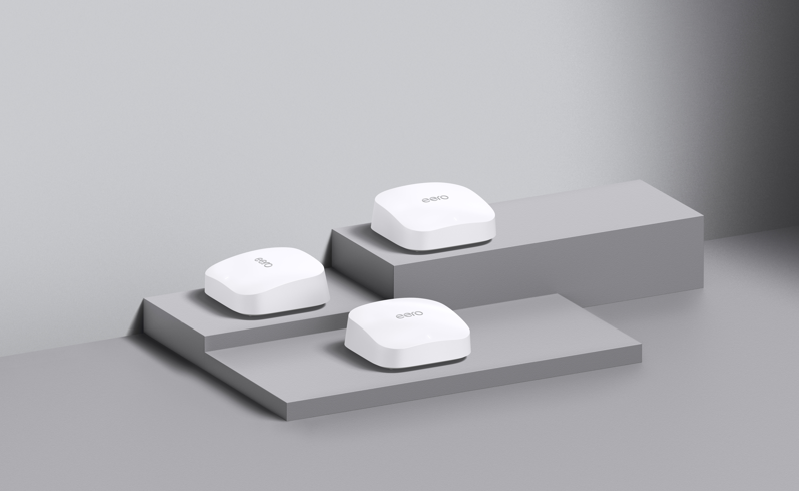
3. eero 7
But since the eero 6 models launched, Wi-Fi has evolved again. The rollout of Wi-Fi 7 in 2024, marked a much bigger leap in capabilities than previous upgrades, by offering:
The fastest speeds yet – up to 3 times Wi-Fi 6 and 5 times Wi-Fi 5, pushing up to 40Gbps in some cases
All-new Multi-Link Operation capabilities, which lets devices switch, or use multiple bands at once for enhanced stability
Even better coverage and mesh networking than previous standards
A 20% increase in peak performance, due to the leap to 4K-QAM
Cross-compatibility with older devices, even at Wi-Fi 5 and beyond
Smarter spectrum use, which doubles the capacity compared to Wi-Fi 6 and 6E
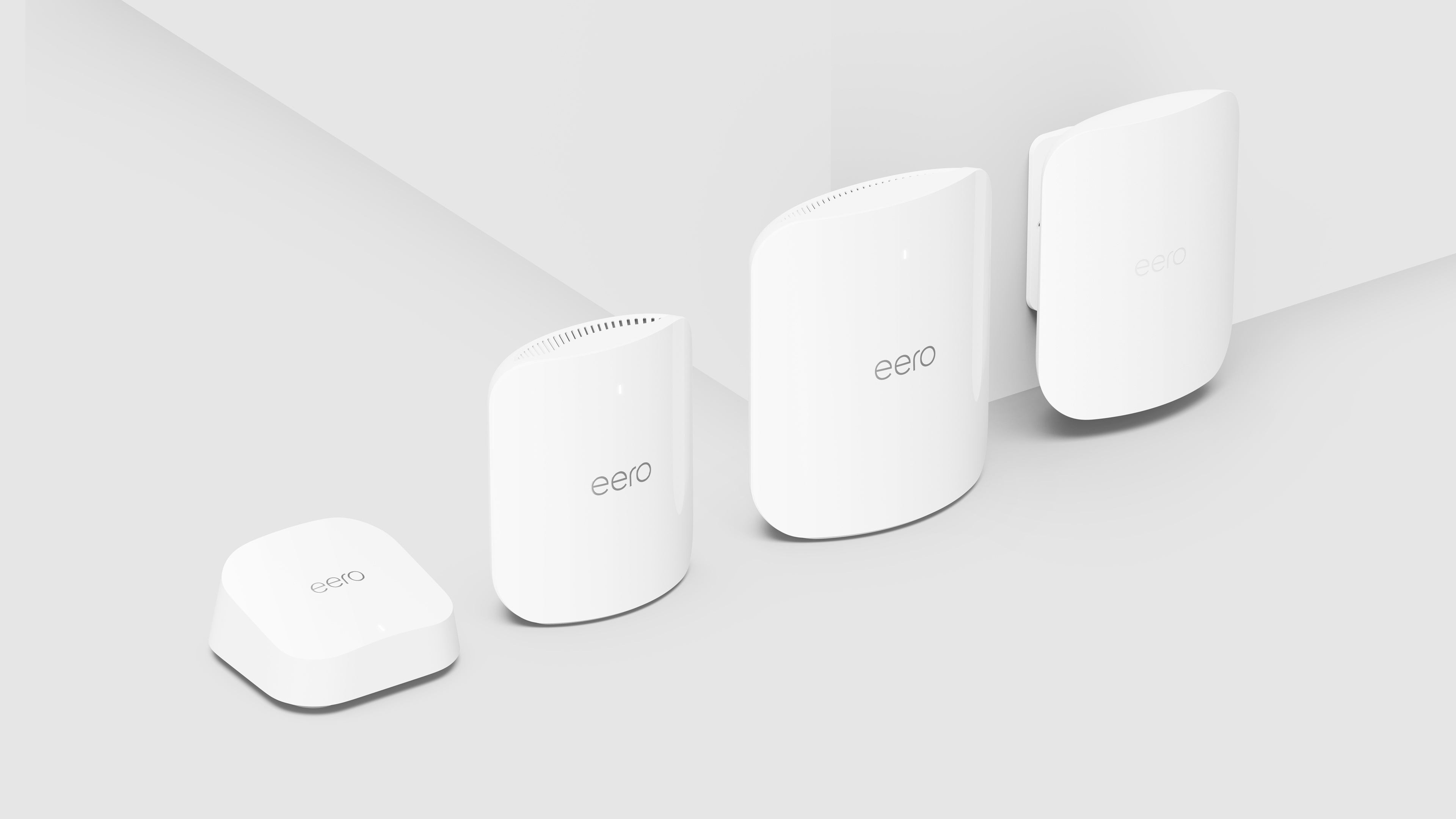
eero’s Wi-Fi 7 range is its fastest, most advanced range yet. It’s built to handle the highest home Wi-Fi demands, such as households using:
Ultra-HD 8K viewings of your favourite shows and movies
Highly reactive and immersive real-time gaming, augmented reality and VR tech
The most data-heavy applications
Multi-gigabit broadband connections
While some of these capabilities may seem slightly ahead of everyday needs, Wi-Fi 7 is built for the future. It’s a smart long-term investment, as our homes become more connected – especially with next-generation tech already entering our homes, and with hundreds of millions more Wi-Fi 7 devices expected to arrive in the coming years.
Embracing the future of Wi-Fi
At LightSpeed, we’re always thinking ahead. All our packages, now only offer eero 7 routers or above. In fact, we’re the only broadband provider offering the full range of eero 7 routers in the UK – the eero 7, the Max 7 and the Pro 7.
Homes are only getting smarter. And while our gigabits speeds, like our newly launched 5Gbps, might feel cutting edge today – that’s likely to change in the next 5-7 years. With LightSpeed, you’re covered for today and tomorrow.
You can take a look at our packages, and our range of available eero routers here