
What is Voice over Internet Protocol (VoIP)?
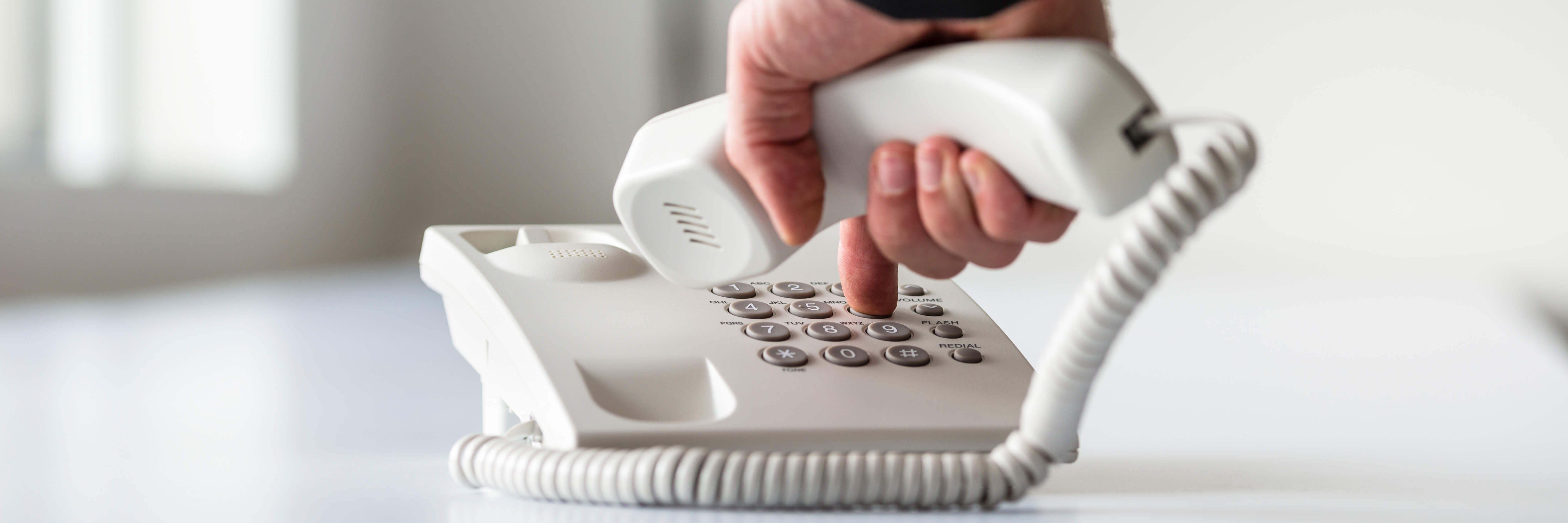
If you’ve looked into switching or setting up a new home phone recently, you’ll probably have come across the term, VoIP. VoIP officially stands for ‘Voice Over Internet Protocol’, although you may also hear it called Digital Voice. Put simply, VoIP is a technology that lets you make voice and video calls over the internet instead of through traditional landlines or mobile networks.
You may have used it before to catch up with long-distance family, hold meetings or collaborate with your colleagues, or for so many of us, it’s also that thing that kept us all connected during lockdown. But what actually is VoIP and how does it work?
What is VoIP and how does it work?
VoIP converts analogue voice and video signals into digital data (or ‘data packets’) and transfers them over broadband to make calling more seamless. You’ve probably already seen or tried platforms like Teams, Skype, Zoom, WhatsApp, FaceTime or Facebook Messenger - all of which use VoIP technology to make calling others quicker, more efficient and more accessible.
But it’s not just business platforms that use VoIP, millions of people across the UK are now using VoIP as a replacement for their landline phone and to make day-to-day calls. It’s a more developed technology built to cater to modern demands such as being able to dial friends and family from multiple different devices, make video calls, and call internationally without ridiculously high costs.
These days, most people can easily connect to a VoIP software or application from practically any device including:
Laptops
Mobile
Tablets
Smart TVs and other smart devices
What are the benefits of VoIP?
Compared to landline phone calls, VoIP technology brings a number of new and exciting benefits:
Cheaper calling
One of the biggest advantages of VoIP is cost savings. Traditional phone providers typically charge separate fees for call minutes, long-distance calls and international calling. VoIP services reduce or eliminate many of these costs by routing calls through an internet connection instead of the public telephone network.
For individual users, VoIP apps are often free and easy to download and use. Calls made between two people on the same platform are typically free (like making calls directly through WhatsApp or Facetime) regardless of location, while calls to mobile or landline numbers are usually much cheaper than standard carrier rates. As long as you already have a stable internet connection, there are often no additional call charges beyond your existing broadband or mobile data plan.
High quality calls Because VoIP technology delivers voice calls digitally rather than through traditional analogue phone lines, this allows for much clearer audio quality, often in HD and without interference.
Conversations typically sound sharper, making it easier to hear tone, detail, and speech without the crackling, buzzing, or background interference that you may experience with older landline systems.
Compatible with older mobile and landline numbers
Although VoIP operates over the internet, it still allows users to communicate easily with traditional phone networks. This means you can use a VoIP service to call standard mobile and landline numbers just as you would with a regular phone.
Many VoIP providers also support incoming calls from traditional numbers, helping you to stay accessible without requiring contacts to download a specific app or platform.
Number porting
Another major advantage is number porting. This process allows you to keep your existing phone number when switching from a traditional landline or mobile provider to a VoIP service. Keeping the same number helps businesses maintain continuity with customers and avoids the inconvenience of updating contact details across websites, marketing materials, and directories.
What is a VoIP phone and how do I get one?
Many broadband providers are now offering VoIP or Digital Voice services as an extra to their packages.
The switchover is usually really simple. There’s typically a choice of packages – like if you want to simply divert your landline calls to you mobile, continue to use an old-style hard-wired phone, or get a full Digital Voice ‘hub’ which plugs into your router and works across multiple devices with a wider range of features.
To keep using your analogue handset, they should be able to provide you with a special adapter or socket to connect it to your router. Your provider can also port your old number across for you. This can sometimes take a few days, though your current service should still work in the meantime.
After that, your phone calls will work almost exactly like they always have, just with better quality and more features!
How is VoIP different from other apps and systems?
VoIP softwares have a range of integrated features that work seamless compared to stand-alone apps and services including:
HD video calling
Group calling, for friends and family in multiple locations at once, rather than only one person at a time
Recording voicemails and sending them to email addresses, not just voicemail services
Call forwarding to a number or service of your choice
Call recording, so that you can listen back to them later
These go far beyond what traditional landline technology can offer.
Take your landline wherever you want
Once you port your landline number over to a Digital Voice solution, you can make or receive calls using your landline number from anywhere with a broadband connection.
But to make the quality of your calls the best they can be, you need a strong and stable internet connection. Modern full fibre broadband is considered the best widely available on the market, up to 20x faster than traditional copper internet, it keeps everything smooth and stable.
Getting VoIP before the UK landline switch-off
One major thing to note is that VoIP isn’t just a ‘nice to have’ modern alternative to the traditional home phone. The UK is switching off all copper landline services from January 2027, meaning that all calls will now need to be made over the internet using VoIP as a primary means of communication.
Millions of people have already made the switch to VoIP, and making the move early will help to avoid any disruptions when the UK moves away from copper cabling and connectivity.

Ready for the future of voice calling?
At LightSpeed, we offer a future-ready Digital Voice service, as an add-on to our broadband packages, helping to bring our customers up to date with clearer, more feature-rich and cost-saving digital voice calls in preparation for future broadband changes.
We’ll even help you port your old landline number across and make sure you’re set up to access the service from a range of different internet-enabled devices, including your mobile phone. VoIP prices start from as little as £4.80 a month, making it a great investment ahead of the copper switch off.
Looking to make the switch? Take a look at our Digital Voice page to explore your options.
No more buffering. No more lag. Just pure, uninterrupted speed.
Switch to LightSpeed full fibre broadband today